
Last Updated: October 25, 2026
Quick Summary
A windshield repair warranty is a written promise from the shop that performed your repair to stand behind its workmanship for a set period or set of conditions. It covers how well the repair was done, not new damage or the glass around it, so always confirm the duration, claim limit, and exclusions in writing before you agree.
- Workmanship coverage protects how well the repair was done; a new rock hit is new damage, not a failed repair.
- Repair warranties from shops tend to be shorter and narrower than manufacturer-backed protection plans.
- Nearly every repair warranty excludes a fresh impact, because a new hit is a new event.
- Ask for the warranty terms in writing before the repair and keep the itemized invoice afterward.
- A repair warranty, a protection plan, and a factory warranty are three different documents with different rules.
Table of Contents
- What Windshield Repair Warranty Coverage Actually Includes
- Windshield Repair Warranty Terms: What to Read Before You Agree
- How Long Windshield Repair Warranty Length Really Is
- Windshield Repair Warranty Exclusions You Should Expect
- The Windshield Repair Workmanship Warranty, Explained
- Protection Plans, Factory Warranty, and What They Don't Cover
- How to Verify Coverage and Document a Claim
- Text a Photo of Your Chip for a Repair Assessment
- Frequently Asked Questions
What Windshield Repair Warranty Coverage Actually Includes
Windshield repair warranty coverage is a written promise from the business that performed your repair to stand behind its work for a set period or set of conditions.
The industry is not small. IBISWorld's Auto Windshield Repair Services industry data counts 6,171 businesses in this space, and the sector grew at a 2.7% compound annual growth rate from 2021 to 2026.
Workmanship Versus the Damage Itself
Two things get confused constantly:
- Workmanship coverage protects how well the repair was done. If the repaired area fails because of the repair, that is a workmanship issue.
- Damage coverage protects the glass. A new rock hit is new damage, not a failed repair.
Most repair warranties only address the first. Read the fine print and you will see the word "workmanship" doing a lot of work.
Windshield Repair Warranty Terms: What to Read Before You Agree
Start with four items: the coverage period, what counts as a claim, who is covered, and how a remedy is delivered. Those four lines decide almost everything.
Here is what to check in order:
- Duration: stated in years, months, or "lifetime of ownership."
- Transferability: does it follow the vehicle or stay with the original owner?
- Claim limit: unlimited occurrences, or a cap?
If any of those is vague, ask for it in writing before the repair starts. If you have questions about coverage, costs, or how the process works, our mobile glass repair questions answered page covers the ones we hear most.
How Long Windshield Repair Warranty Length Really Is
Windshield repair warranty length ranges from 90 days to the life of your ownership, and the range is wider than most drivers expect. Manufacturer-backed protection plans sit at the long end.
Repair warranties from shops tend to be shorter and narrower. Some are tied to ownership. Some expire when the vehicle is sold.
Watch out: a "lifetime" label means nothing on its own.
Windshield Repair Warranty Exclusions You Should Expect
New damage is the big one. Nearly every repair warranty excludes a fresh impact, because a new rock hit is a new event, not a failed repair. But the exclusions page is where two warranties with identical-sounding headlines actually differ, so it deserves more than a skim.
Common exclusions include:
- Additional chips or cracks that appear after the repair
- Damage from a new stone impact or road hazard
- Damage that spreads from a point the repair did not cover
The Exclusion Categories, Sorted by Cause
The fastest way to read any exclusions page is to sort every line by what caused the failure. Most clauses fall into one of five buckets:
- New events. A fresh impact, a new road hazard, a second chip. These are new damage, not a failed repair, and almost no workmanship warranty covers them.
- Pre-existing conditions. Damage the technician documented as borderline, contaminated, or near an edge before the repair started. If it was disclosed up front, it is usually excluded from workmanship coverage.
- Cosmetic outcomes. A small mark that remains after a repair is normal and is typically written out of coverage. A warranty that promises an invisible result is promising something no repair can reliably deliver.
- Third-party work. If another shop reworks, drills, or alters the repaired area, the original warranty usually ends.
- Owner-caused damage. Impact from a car wash brush, a scraper, or a pressure washer aimed at the repair point is commonly excluded.
New Impacts, Road Hazard, and Wear and Tear
Road hazard damage is its own category. A warranty on a repair does not turn into road hazard coverage, and a factory warranty generally does not either. One owner discussion on a Reddit thread about a Chevy Bolt EV cracked windshield describes a crack as wear and tear rather than a factory defect, which tracks with how most manufacturer warranties treat glass.
How to Read an Exclusions Page in Five Minutes
Bring the warranty document to the counter and look for these specific phrases:
- "New impact" or "subsequent damage", confirms new hits are excluded.
- "Pre-existing" or "as documented", tells you whether borderline damage was disclosed and carved out.
- "Cosmetic" or "appearance", flags whether the provider promises a look you should not expect.
If a clause is ambiguous, ask the provider to write the interpretation on the invoice. A warranty you can read is only useful if you can also act on it.
The Windshield Repair Workmanship Warranty, Explained
A windshield repair workmanship warranty covers defects in how the repair was performed, not the glass itself. If the repaired area fails because of the repair, the workmanship warranty is what you use.
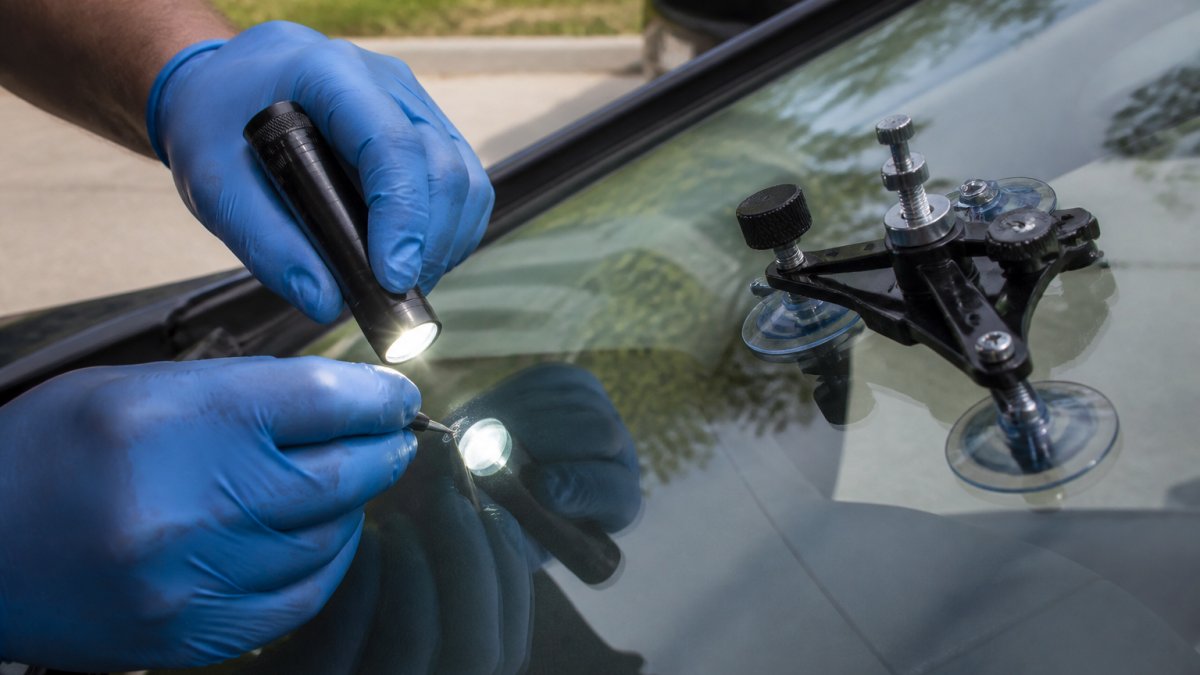
What does that look like in practice? A repair that develops a leak at the injection point, or a repair that visibly fails in the repaired zone, is a workmanship question.
This is where a written policy beats a verbal promise. Our windshield repair warranty spells out workmanship coverage while the original owner owns the vehicle, a free re-repair if a repair spreads, and a replacement credit within one year if it spreads beyond repair.
Protection Plans, Factory Warranty, and What They Don't Cover
Protection plans and factory warranties are different products with different rules, and neither one is a repair warranty. Our guide on whether you can fix a cracked windshield explains size and location limits, repair steps, and how to stop a chip from spreading.
- Factory warranty covers manufacturing defects. Glass damage from a rock is not a defect.
- Protection plan is a purchased add-on with its own coverage period and claim limits.
- Vehicle service contract is a separate contract, often confused with a warranty.
A protection plan may cover repairs and set a claim limit. A repair warranty covers the repair itself. Mixing them up leads to denied claims.
The Four Products Side by Side
Product | What it covers | Who sells it | Typical claim limit | Transfers with vehicle? |
|---|---|---|---|---|
Factory warranty | Manufacturing defects | Vehicle manufacturer | Per the vehicle's warranty booklet | Usually yes, within the term |
Protection plan | Named glass events, per the plan | Manufacturer or third party | Often a per-occurrence or annual cap | Depends on the plan |
Vehicle service contract | Named mechanical or glass components | Dealer or third party | Per the contract | Sometimes, with a fee |
Repair warranty | Workmanship on the repair | The shop that did the repair | Usually unlimited re-repairs, per the shop's terms | Often original owner only |
Read the table as a starting point, not a substitute for the actual document. Every row has exceptions, and the exceptions are where claims get denied.
What Protection Plans Usually Do and Don't Do
A protection plan is a purchased product, so its terms are written to define exactly what triggers a payout. In practice, most plans:
- Name the covered events. A plan may cover chips and cracks from road hazards but exclude damage from accidents, vandalism, or improper prior repairs.
- Set a claim limit. Some plans cap the number of claims per year or per term. Others cap the dollar amount per occurrence. Ask which one applies to you.
- Restrict approved providers. Many plans require you to use an in-network shop. If you use an out-of-network provider, the plan may reimburse less or not at all.
- Require pre-authorization. Most plans want a phone call before the work starts. Skipping that step is one of the most common reasons a claim is denied.
How to Verify the Terms Before You Rely on Them
Before you count on any plan or warranty, get four answers in writing:
- What triggers a claim? A specific event, a defect, or a workmanship failure?
- What is the claim limit? Per occurrence, per year, or per term?
- Who is an approved provider? Can you use the shop of your choice?
- Does it transfer, and how? If you sell the vehicle, does the coverage follow it?
If any answer is verbal, ask for it on the invoice or in the plan document. A plan you cannot quote back to the provider is a plan you cannot rely on.
How to Verify Coverage and Document a Claim
Verification is boring and it is the whole game. Our transparency promise covers the front end of that: we confirm price and repairability before we schedule, so there are no surprises later.
Use this checklist:
- Ask for the warranty terms in writing before the repair
- Confirm the coverage period and whether it transfers
- Confirm the claim limit and what counts as a claim
- Photograph the damage before and after the repair
Our transparency promise covers the front end of that: we confirm price and repairability before we schedule, so there are no surprises later.
One more thing worth knowing. We do not bill insurance or file claims. We provide an itemized invoice you can submit yourself if you choose to.
Text a Photo of Your Chip for a Repair Assessment
The fastest way to know where you stand is a photo.
Chip repair starts at $89, and each additional chip is $30.
A repair is designed to stabilize qualifying damage.
Still have questions about coverage, cost, or how the process works?
If a repair is not the right answer for your damage, we will say so and refer you to a trusted glass shop.
Your windshield already took the hit.
Frequently Asked Questions
Are windshield repairs covered by warranty?
It depends on the provider and the type of warranty. Many repair warranties cover the workmanship, meaning the repair itself, against continued cracking in the repaired area for as long as you own the vehicle. They generally do not cover new stone impacts, road hazard damage, or pre-existing conditions. Ask for the written terms before you book so you know exactly what is covered and for how long.
Does a repair warranty cover damage that spreads?
A workmanship warranty typically covers the repaired portion if it continues to crack, since that points to a problem with the repair rather than a new impact. ClearPath Mobile Auto covers workmanship while the original owner owns the vehicle and offers a free re-repair if the repair spreads. If damage spreads beyond what can be repaired, replacement credit may apply within one year. Read the full terms at https://www.clearpathmobileauto.com/warranty.
Can a small mark remain after a windshield repair?
Yes. Repair is designed to stabilize qualifying damage, not erase it. A small mark or faint blemish often remains visible at certain angles, especially on larger or older chips. That is normal and does not mean the repair failed. What matters is that the damage is sealed so it is less likely to keep spreading. Ask your technician what result to expect for your specific chip before work begins.
What should I check in a windshield repair warranty?
Check four things: the coverage period, what damage is covered (workmanship versus new impacts), exclusions such as road hazard or wear and tear, and the remedy if the repair fails. Confirm whether the warranty transfers if you sell the vehicle and whether you need the original invoice to make a claim. Get the terms in writing and keep your receipt and before-and-after photos.
