
Table of Contents
- Can You Fix a Cracked Windshield? How to Tell Before It Spreads
- Step 1: Assess the Damage - Chip or Crack, Size, and Location
- Step 2: Safe Temporary Steps Before Your Repair
- Step 3: DIY Repair Kits vs. a Professional Technician
- Step 4: How Windshield Crack Repair Actually Works
- Windshield Repair vs. Replacement: Which Does Your Damage Need?
- Windshield Repair Time: What to Expect From Start to Finish
- Windshield Crack Repair Cost and Windshield Repair Insurance Coverage
- Frequently Asked Questions
Last Updated: October 13, 2026
Can You Fix a Cracked Windshield? How to Tell Before It Spreads
Yes, you can often fix a cracked windshield when the damage qualifies. Under ROLAGS repair standards, many cracks up to 14 inches can be repaired, depending on where the crack is, its condition, and whether it reaches the edge.
Here's the part most guides skip: damage can spread. Temperature changes, potholes, and even slamming a door add stress to the glass around an existing break.
Below, we'll walk you through a four-step process to judge your damage, buy time safely, and decide between a kit and a pro.
Step 1: Assess the Damage - Chip or Crack, Size, and Location
Clean the glass and look at the damage in good light. A windshield chip is a small, round break from a rock impact; a crack is a line across the surface. Chips are easier to fix. Cracks depend on length and location.
Run your fingernail across the spot. If it catches, the damage has depth and may need more than a surface fill.
- Chip: small pit or star, often from road debris
- Crack: a visible line, sometimes with branches
- Bullseye: a chip with a dark center ring
- Combination break: a chip with cracks running out of it
How Crack Length and Depth Limit Repairability
Length matters, but it isn't the only filter. Under ROLAGS standards, many cracks up to 14 inches can be repaired, though not every crack qualifies. Depth matters too: a break in the outer layer of the laminated glass is a good candidate, while damage that reaches the inner layer is not.
Why Location Matters: Edge Cracks and the Driver's Line of Sight
Edge cracks are the hardest case: glass near the frame carries more stress, so a crack that reaches the edge often can't be repaired, though it's assessed case by case. The driver's line of sight is the second concern: even a clean repair can leave a faint mark in your direct view of the road.
Damage Type | Typical Size | Usually Repairable? |
|---|---|---|
Small chip | Under 1 inch | Yes |
Star or bullseye | Under 1 inch | Yes |
Short crack | Up to 6 inches | Often |
Long crack | 6 to 14 inches | Often, depending on location and condition |
Edge crack | Any size | Case by case |
Step 2: Safe Temporary Steps Before Your Repair
You can slow a crack while you wait for a repair, but you can't stop it for good. The goal is to keep dirt out and reduce stress until a technician injects resin. Do this the same day you notice the damage.
- Clean the area gently with a soft cloth. Skip harsh cleaners.
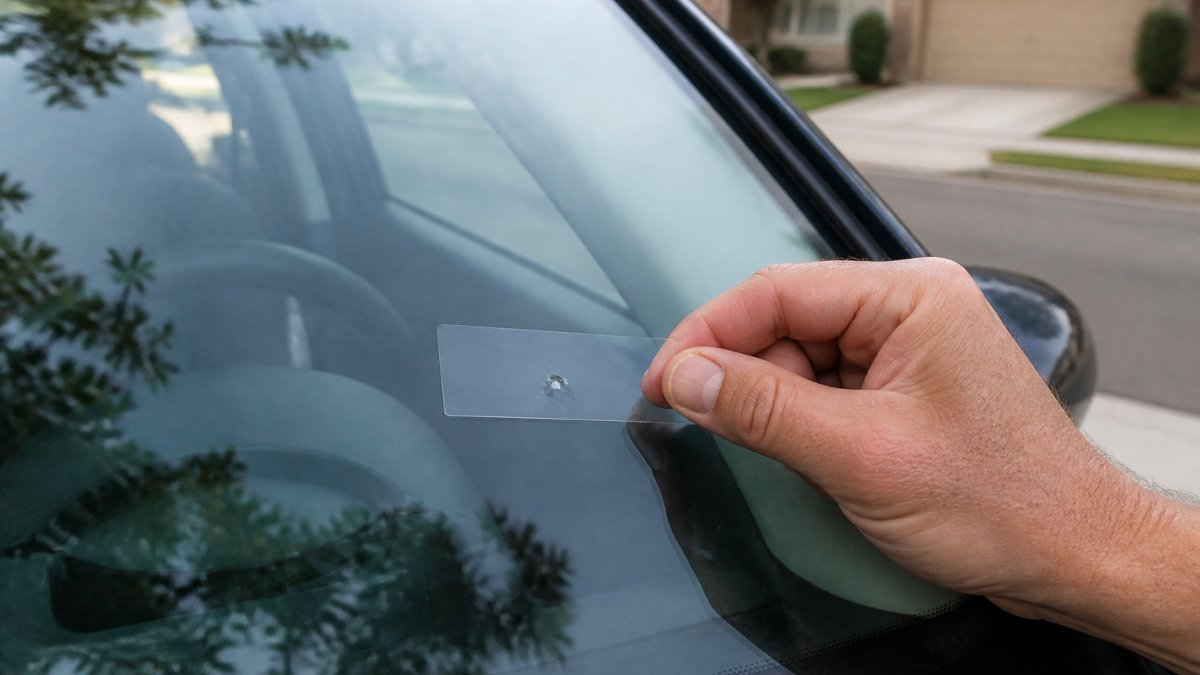
- Cover the spot with clear repair tape to keep out moisture and grit.
- Park in the shade when you can. Big temperature swings add stress to damaged glass.
- Avoid slamming doors and trunk lids. The pressure flexes the glass.
- Stay off rough roads if you have a choice.
Step 3: DIY Repair Kits vs. a Professional Technician
DIY kits work for simple chips but have real limits. A store-bought kit can fill a basic chip if you follow the steps exactly, but kits struggle with cracks, star breaks, and any damage with depth. They also can't match the vacuum and pressure a pro uses to pull resin into every branch.
A professional technician brings better tools and a trained eye. At ClearPath Mobile Auto, Marc is a certified technician, so the repair follows a proven process rather than a guess. We also come to you: no shop visit, no time off work.
- DIY kit: best for one small, fresh chip
- Pro repair: best for cracks, multiple chips, and anything near an edge
- Pro repair: includes a proper cure and polish for a clearer finish
Step 4: How Windshield Crack Repair Actually Works
Repair fills the break with a clear resin that hardens in place. It's designed to stabilize qualifying damage and improve clarity. It doesn't erase the damage, and a small mark may remain.
Cleaning and Preparing the Damaged Area
The first job is surface preparation. The technician removes loose glass and dirt, then dries the spot. Any moisture or debris left behind weakens the bond. This step is why a clean, taped chip repairs better than one left open for a week.
Injecting Resin, Curing, and Polishing the Repair
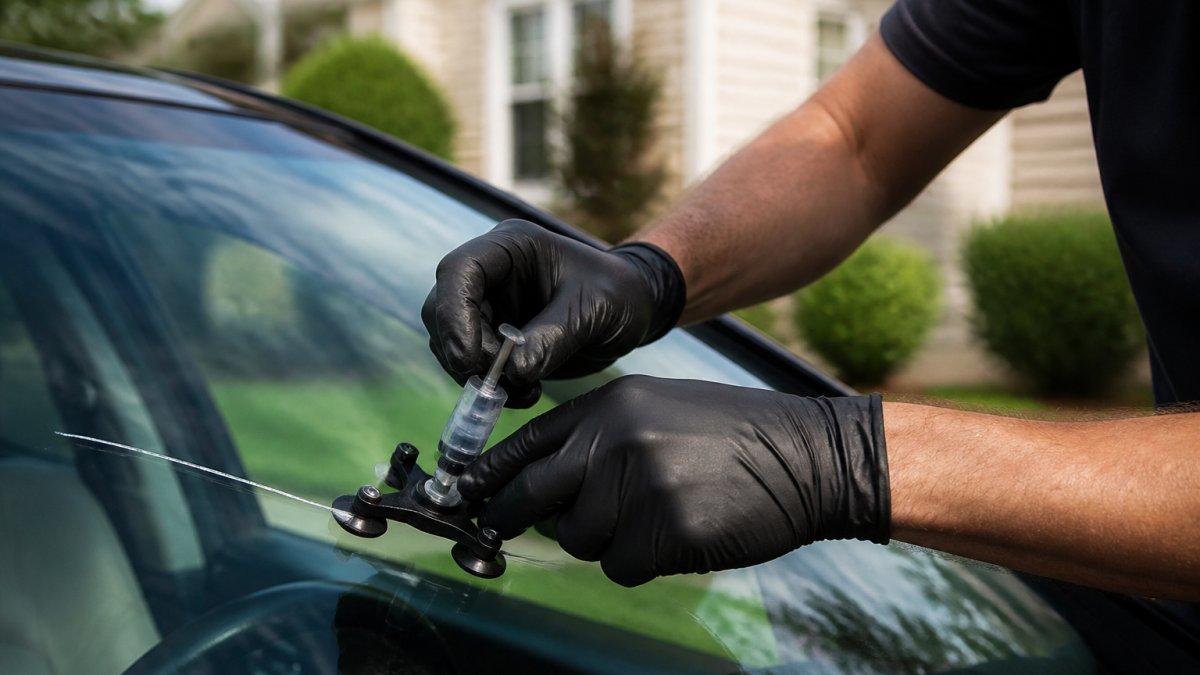
Next comes the resin. A tool presses it into the break, often using vacuum to pull out trapped air. Once the resin fills every part of the damage, the technician cures it with UV light, then polishes the repair flush with the rest of the glass.
Windshield Repair vs. Replacement: Which Does Your Damage Need?
There's no single length cutoff that decides this for every windshield. Location, edge involvement, depth, and condition matter as much as length.
ClearPath focuses on repair. If your damage needs replacement, we'll tell you and point you to a glass shop we trust.
The five factors that decide repair vs. replacement
- Size. Chips and short cracks are strong repair candidates. Under ROLAGS standards, many cracks up to 14 inches can qualify, but longer damage needs a closer look at location and condition.
- Location. Damage in the driver's primary sightline, at the edge of the glass, or under the cowl or molding is less likely to qualify for repair. Glass near the edge carries more stress.
- Depth. Damage confined to the outer layer of the laminated glass repairs well. Damage that penetrates the inner layer, or that has been contaminated with moisture and dirt, is a poor candidate.
- Number of breaks. One or two isolated chips are routine. A windshield peppered with multiple cracks, or with cracks that intersect, is usually replaced.
- Age and condition of the glass. An old windshield with pitting, prior repairs, or existing stress cracks may not hold a new repair.
Why there's no universal length rule
Numbers like under an inch, under six inches, or under a dollar bill are rules of thumb, not standards. ROLAGS, the industry repair standard, allows repair of many cracks up to 14 inches when other conditions are met.
What changes after a replacement on a modern vehicle
Ask any shop doing a replacement two questions: does my vehicle require recalibration, and is it included in your quote?
A simple decision path
- Small chip, away from the edge, outside your sightline → repair.
- Crack up to 14 inches, away from the edge and outside your sightline → often repairable; confirm in person.
- Crack that reaches the edge, sits in your direct sightline, or runs longer than 14 inches → likely replacement.
- Multiple cracks or intersecting damage → replacement.
- Any replacement on a vehicle with a windshield camera → confirm recalibration is included.
When in doubt, have a technician look at it in person.
Windshield Repair Time: What to Expect From Start to Finish
A single chip or short crack usually takes well under an hour. The resin needs time to cure, and the polish adds a few minutes. Most drivers are back on the road quickly, which is why mobile service works so well for busy schedules.
Replacement takes longer and often needs the vehicle to sit so the adhesive can set. If you're weighing the two, time is another point for repair when your damage qualifies.
Windshield Crack Repair Cost and Windshield Repair Insurance Coverage
What drives the price of a repair
- Number of breaks. One chip is one price. Three chips on the same windshield usually cost more than one, but often less than three separate visits.
- Type of damage. A simple bullseye or star break fills faster than a combination break with branching legs.
- Location. Damage near the edge or under the cowl takes longer to access and prep.
- Mobile vs. shop. Mobile service adds a trip charge at some providers; others fold it into the flat rate.
A single-chip repair typically costs a fraction of a full replacement, often small enough that paying out of pocket beats filing a claim.
At ClearPath Mobile Auto, chip repair is $89, with $30 for each additional chip. Crack repair is $89 up to 3 inches, $120 for 3–6 inches, and $135 for 6–14 inches.
How insurance usually handles glass
Many policies include a glass provision, but the details vary widely by state and carrier. ClearPath doesn't bill insurance or file claims; we provide an itemized invoice you can submit to your insurer. Two structures are common:
- Repair is covered with no deductible. Some insurers waive the deductible on repair specifically, because paying for a repair is cheaper for them than paying for a replacement. Ask whether your policy has this waiver.
- Repair is covered subject to your deductible. If your comprehensive deductible is high, the payout may be zero and you'd pay out of pocket anyway.
Questions to ask your insurer before you file
- Does a glass repair count as a claim on my policy?
- Will filing affect my premium at renewal?
- Is there a separate glass deductible, or does my comprehensive deductible apply?
- Do you have a preferred shop network, and can I use a mobile provider instead?
Warranties and workmanship
Ask any provider what happens if the repair spreads. ClearPath's warranty covers the repaired area for as long as you own the vehicle. If it spreads, we re-repair it at no charge, and if it spreads beyond repair within the first year, the repair cost is credited toward a replacement through a partner glass shop.
When to slow down
Don't authorize a repair until you have a clear price and a stated warranty. Those two items separate a clean transaction from a surprise bill.
Frequently Asked Questions
Is it possible to repair a cracked windshield without replacing it?
Yes, in many cases. A cracked windshield can usually be repaired if the damage is a chip or a crack shorter than about 6 inches, sits away from the edges, and stays out of the driver's direct line of sight. Damage in those zones weakens the laminated glass and often requires replacement instead. A technician can confirm repairability with a visual inspection before any work begins.
How much does windshield crack repair cost, and will insurance cover it?
Windshield crack repair cost depends on the size and number of damaged areas, and ClearPath Mobile Auto lists current pricing on its website. Many US auto policies include windshield repair insurance coverage that waives your deductible for repair rather than replacement. Check your policy or call your insurer before booking, and ask whether a camera recalibration is needed after any replacement work.
How long does windshield crack repair take?
Most single-chip or short-crack repairs take about 30 to 60 minutes. Windshield repair time varies with the number of damage points, temperature, and how long the resin needs to cure. A mobile technician working in your driveway can often finish a straightforward repair in under an hour, so you can drive again shortly after the resin sets.
Can you repair a windshield crack yourself with a DIY kit?
DIY repair kits can fill a small chip, but they rarely match professional results. Kits struggle with crack depth, trapped moisture, and proper resin curing, and a poor fill can leave a visible haze or let the crack spread. A certified technician uses vacuum-assisted injection and controlled curing, which is why professional repair is the safer choice for anything beyond a tiny surface chip.
A small chip left alone can turn into a long crack, and a long crack can turn into a replacement. ClearPath Mobile Auto brings certified repair to your driveway in Anna and across North Collin County, with upfront pricing, same-day appointments when available, and no shop visit. Text a photo of the damage to (469) 919-2383 for a quick first assessment and quote.