
Last Updated: November 7, 2026
Quick Summary
Windshield chip types are identified by shape: bull's-eye chips show a dark center with a ring, star breaks show short lines radiating from a point, half-moon chips form a crescent, and combination breaks mix features. Check the shape from both sides of the glass in open shade, and measure the damage with a tape measure or a coin for scale.
- A bull's-eye chip has a dark center surrounded by a ring and is usually the easiest type to spot.
- Star breaks have short lines branching outward from a central point, like a star.
- Measure the longest dimension with a tape measure instead of judging size by eye.
- Do not press on the damage or try to flatten it with heat or pressure.
Table of Contents
- Why Identifying Your Windshield Chip Type Matters
- Windshield Chip vs Crack: Knowing the Difference
- Common Windshield Damage Types You Will See
- Types of Windshield Cracks and Their Causes
- A Step-by-Step Visual Check for Your Windshield Chip
- What to Do After You Identify Your Chip
- Book a Chip Assessment by Texting Us a Photo
- Frequently Asked Questions
Why Identifying Your Windshield Chip Type Matters
Knowing your windshield chip type helps you decide what to do next. A small chip in the right place may be repairable, and acting early can keep it from turning into a bigger problem.
Different damage patterns behave differently. Some stay small, while others spread faster after a temperature change or a bump on the road.
- Identifying the pattern helps you describe the damage clearly
- It helps you judge whether the damage needs attention soon
- It prepares you for a quick assessment, whether you service it yourself or not
Windshield Chip vs Crack: Knowing the Difference
A chip is a small area where the glass has broken away, usually no bigger than a coin.
Windshield chip types are easiest to tell apart by shape and size. Get straight answers to common questions about chip repairs, costs, and service areas here.
Watch out: Do not press on the damage or try to flatten it with heat or pressure.
Common Windshield Damage Types You Will See
Most windshield damage falls into a few familiar patterns. The sections below describe the most common windshield chip types and what each one usually looks like.
Bull's-Eye Chips
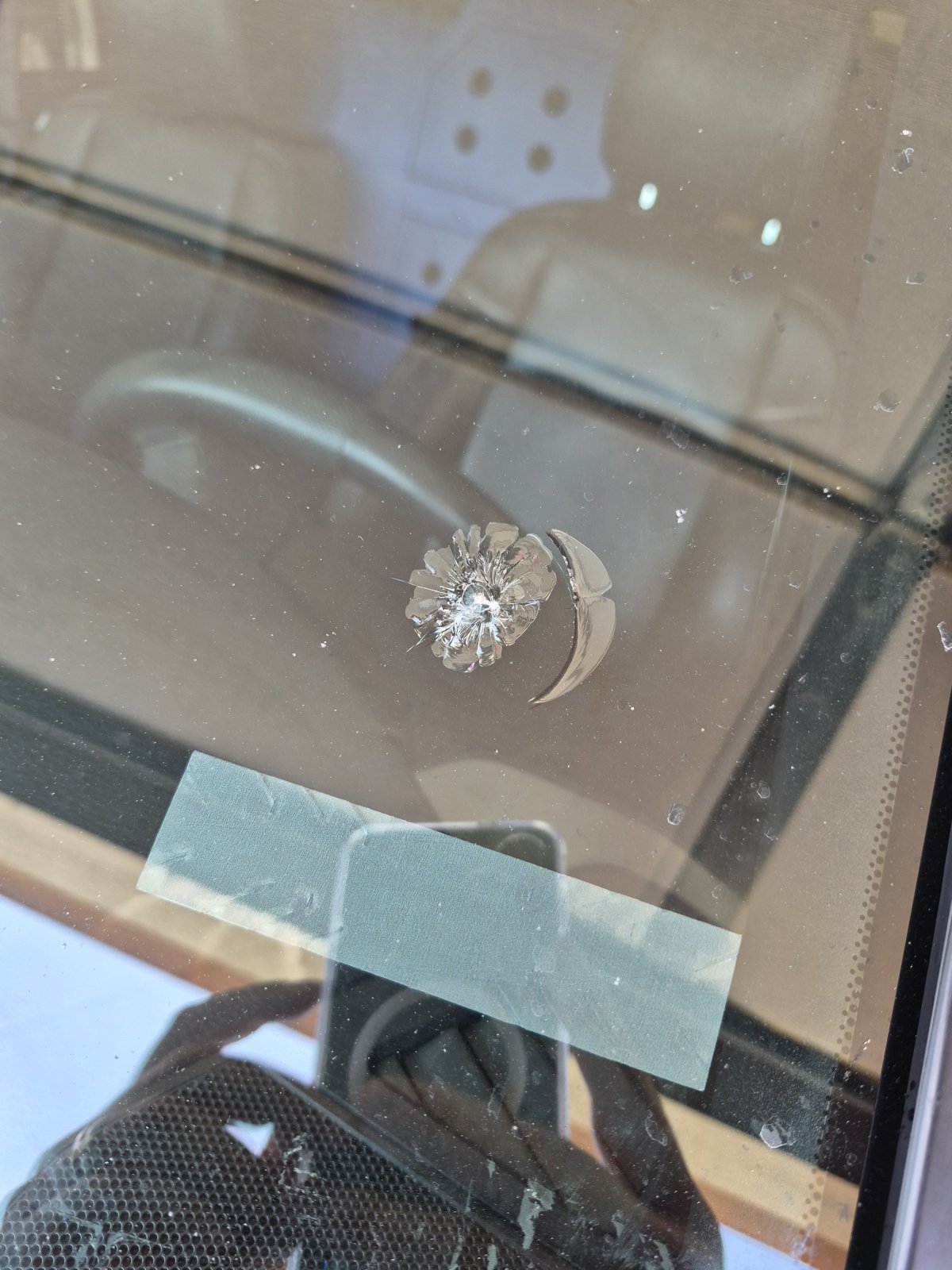
A bull's-eye chip looks like a dark center surrounded by a ring. It often forms when a small stone hits the glass straight on. Bull's-eye chips are usually the easiest type to spot.
Star Breaks and Half-Moon Chips
A star break has a central point with short radial lines branching outward, like a star. A half-moon chip is a partial circle that looks like a crescent, often caused by a glancing impact. Both are common.
Combination Breaks and Surface Pits
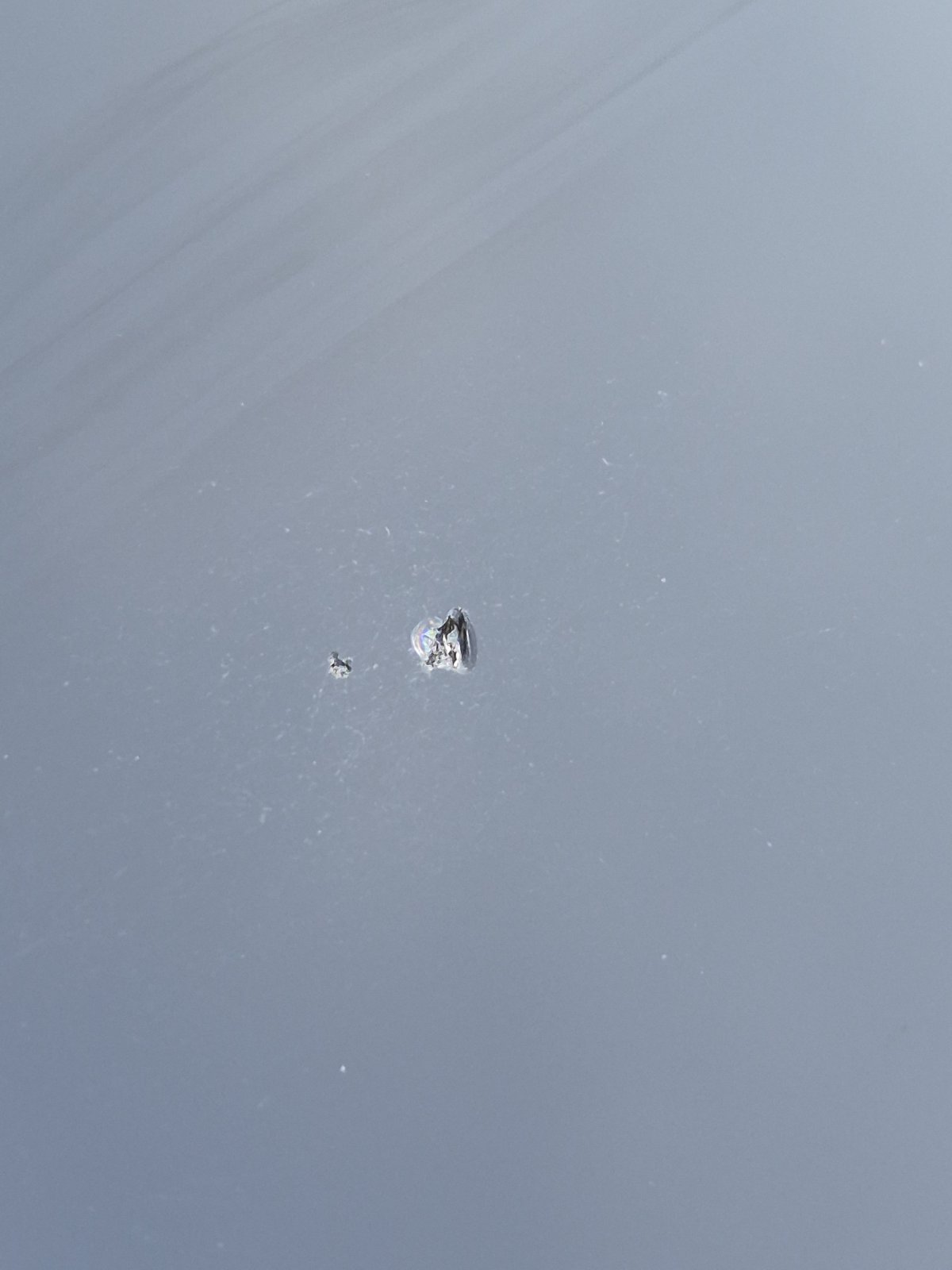
A combination break mixes features, such as a bull's-eye with long lines running from it. Surface pits are tiny, shallow marks that often come from sand or grit. Pits can look like little dots, and they are sometimes confused with dirt until you look closely.
Types of Windshield Cracks and Their Causes
Cracks have their own patterns, and the cause often shows in the shape. Stress cracks grow from a point of pressure or temperature change, and they tend to run in a single line. Edge cracks start at the outer border of the glass and can spread inward.
Driving on rough roads, sudden temperature changes, and flying debris can all make a crack grow. Keep an eye on any line that is getting longer.
- Stress cracks often grow from a single pressure point
- Edge cracks begin at the glass border and need careful handling
- Long, unexplained lines may be floater cracks
A Step-by-Step Visual Check for Your Windshield Chip
You can classify most damage yourself in about five minutes with good light and a clean windshield. The goal is not to diagnose serviceability, that is confirmed in person, but to describe the damage accurately enough that a technician knows what to expect before arriving.
Step 1: Set up the inspection
Park in open shade or an uncovered driveway. Direct sun washes out the ring and radial lines that define most chip types, while deep shade hides fine cracks.
Watch out: Do not press, poke, or scrape the impact point with a fingernail, key, or tool. Pressure can push trapped debris deeper into the break and make a clean chip harder to service.
Step 2: Look from both sides of the glass
Inspect the damage first from outside, then from inside the cabin at eye level. Some chip types read differently depending on the angle. A bull's-eye often shows a dark center with a bright ring from outside but looks like a faint smudge from inside. A star break's radial lines may only catch the light from one direction.
Step 3: Classify by shape, not by name
Use this short decision flow to sort what you see into a type:
- Is there a ring or circle? If yes, and the center is dark and the ring is unbroken, it is a bull's-eye. If the circle is only partial, a crescent or half-moon, it is a partial bull's-eye or half-moon chip.
- Are there short lines radiating from a center point? If yes, it is a star break. Count the legs roughly; more legs usually mean a larger impact area.
- Is there a ring plus long lines, or a mix of features? That is a combination break. Note which features are present, because combination breaks often need more resin and more time.
- Is it a tiny shallow dot with no ring or lines? That is a surface pit. Pits are often cosmetic but can hide a deeper break underneath.
- Is it a line rather than a spot? Move to the crack checks below.
Step 4: Measure and locate
Measure the longest dimension with a tape measure, not by eye. For chips, note the diameter of the impact area. For cracks, measure the full length of the line. Then note two location facts: whether the damage touches or runs to the edge of the glass, and whether it sits in the driver's direct line of sight. Both affect how a technician approaches the service.
Step 5: Photograph with a scale reference
Place a coin or a small ruler flat against the glass right next to the damage and take a close, in-focus photo from outside. Take a second photo from inside at eye level. A scale reference helps when describing the size of the damage. Avoid flash directly on the glass; angle the phone slightly to reduce glare.
Step 6: Check for crack behavior
If you found a line, look at where it starts and ends. A line that begins at the outer border is an edge crack. A single line growing from a pressure or temperature point is a stress crack. A longer line with no obvious impact point may be a floater crack.
The table below sums up the key checks from the inspection steps so you can run through them quickly.
| Step | What to do | Time |
|---|---|---|
| 1. Set up | Park in open shade and clean glass with a damp microfiber cloth | About 2 minutes |
| 2. Look from both sides | Inspect from outside, then from inside at eye level | About 1 minute |
| 3. Classify by shape | Sort into bull's-eye, star break, combination break, or pit | About 1 minute |
| 4. Measure and locate | Measure with a tape measure and note edge and sightline position | About 1 minute |
| 5. Photograph | Use a coin or ruler for scale, shoot outside and inside | About 1 minute |
| 6. Check crack behavior | Note where the line starts and whether it branches | About 1 minute |
What to Do After You Identify Your Chip
Once you know what you are looking at, the next steps are about protecting the damage and getting a qualified opinion, not about servicing it yourself. Here is a practical sequence.
1. Decide whether to keep driving
Most chips and cracks do not require you to stop driving immediately, but use judgment. Pull over and arrange a tow or a ride if the damage interferes with visibility or if a crack is actively lengthening as you watch.
Watch out: Do not run the defroster on high or pour hot or cold water on the glass to "test" the damage. Rapid temperature change on a compromised area can make a small chip grow.
2. Protect the spot temporarily
Keep the area clean and dry. A small piece of clear tape over the impact point can keep dust and moisture out for a short drive, but remove it before an assessment, adhesive residue can contaminate the break. Do not use household cleaners, sealants, superglue, or DIY resin kits. Those products can trap dirt or cure incorrectly and make a repairable chip harder to service.
3. Document the damage
Take the scale-reference photos described above, one from outside with a coin or ruler, one from inside at eye level. Note the date you first noticed the damage and whether it has changed since. If the damage came from a specific event, save any photos from the scene. This record is useful when you talk to a service provider.
4. Understand what makes damage repairable
Serviceability is confirmed in person, but you can set expectations with a short checklist. A service provider will typically look at:
- Size and length, crack repair is limited to cracks up to 14 inches; longer cracks are not repaired by ClearPath.
- Location, damage at or near the edge, or directly in the driver's sightline, needs closer evaluation.
- Depth and layers, damage that has broken through more than the outer layer is more complex.
- Contamination, dirt, moisture, or old DIY resin in the break can limit what a service can do.
- Number of impacts, multiple chips close together are assessed as a group.
Service is designed to stabilize qualifying damage, and a small mark may remain afterward. Service is not a promise that the damage will disappear or that it will never change.
5. Get a first assessment and a quote
Text a clear photo of the damage to (469) 919-2383.
ClearPath does not bill insurance or file claims. You can review the windshield service warranty for coverage details, including free re-service if a service spreads.
If the damage turns out to be beyond service, ClearPath will tell you and refer you to a trusted glass shop.
Book a Chip Assessment by Texting Us a Photo
The fastest way to start is to text a clear photo of the damage to (469) 919-2383. We will give you a quick first assessment and an upfront quote. Same-day service is available when our schedule allows.
Our mobile windshield chip service comes to your home or office, and windshield crack service is available for longer lines within our size limits. If you are ready to request a quote, you can get a free quote right away.
Hours are Monday through Friday, 7 AM to 7 PM, and Saturday, 9 AM to 4 PM. We serve Anna, McKinney, and nearby North Texas communities.
Frequently Asked Questions
What are the different types of windshield chips?
The most common windshield chip types are bull's-eye chips, which are round with a dark center and radiating lines; star breaks, which have short cracks spreading outward from a central point; half-moon chips, which are partial bull's-eyes shaped like a crescent; and combination breaks, which mix two or more patterns. Surface pits and small nicks are also common. Identifying the type helps you understand what you are looking at, but a professional assessment confirms whether the damage is serviceable.
How can I tell a windshield chip from a crack?
A chip is a small area where the outer layer of glass has broken away, usually no bigger than a coin and with short radiating lines. A crack is a longer line that runs through the glass, often several inches or more. Chips tend to be localized around an impact point, while cracks extend in a continuous line. If you are unsure whether damage is a chip or a crack, text a photo to (469) 919-2383 for a quick first assessment and quote.
Can a windshield chip have more than one damage pattern?
Yes. A single impact can produce a combination break, where a bull's-eye area also has star-break lines radiating from it. These combined patterns are common and can make identification trickier. Look for the central impact point first, then check whether the lines around it follow one pattern or several. Most chip services take about 30 minutes, but the technician confirms serviceability in person.
What should I look for when checking a windshield chip?
Check the chip's size, its location, and whether it touches the edge of the glass or sits in your driver's line of sight. Note whether any cracks are running from it, and whether the surrounding area is clean or contaminated with dirt. Avoid pressing on the chip or running the defroster on high heat. Serviceability depends on location, edge involvement, contamination, and condition, so a professional should confirm the next step.
